
COP28 is a wonderful tapestry of contradiction
As a dual MBA/MS in Sustainability student at the University of Michigan, focusing on regenerative agriculture and sustainable food systems, my time at COP28 was an intense and eye-opening experience. Leaving COP28, optimism, and skepticism wrestled in my chest, a tangled knot mirroring the complexities of the conference itself. This internal conflict, I realized, wasn’t unique to me. It was woven into the very fabric of COP28, a tapestry of ambition and uncertainty, of triumphs and setbacks. As I navigate these conflicting emotions, I invite you to join me in dissecting the outcomes of the conference
The UAE Declaration and the Global Roadmap: A Glimmer of Hope
The week kicked off with the groundbreaking UAE Declaration on Sustainable Agriculture, Resilient Food Systems, and Climate Action. This commitment by over 130 countries to integrate food systems into their national climate plans is a significant step towards a future where agriculture contributes to, rather than exacerbates, climate solutions. Additionally, the launch of the Food and Agriculture Organization’s (FAO) Global Roadmap provided a concrete framework for implementing these ambitious goals.
However, my optimism was tempered by the realities of implementation. For example, the general mood at the Food Pavilion was skepticism. Many delegates from the food industry felt that the UAE Declaration and FAO roadmap didn’t go far enough in calling for reductions in animal livestock, the largest source of emissions within the agricultural sector. This hints at an inherent conflict between the science of climate change and the influence of major companies in shaping policy – firms such as JBS, one of the largest meat producers in the world – will not voluntarily sacrifice their growth, and politicians won’t sacrifice the economic stability and job opportunities offered by animal agriculture in their countries. In a way, this conflict mirrors the GST negotiations on phasing out fossil fuels. Major oil-producing states such as Saudi Arabia have lobbied hard to prevent strong tests in the GST on recommending the end of fossil fuels. It begs the question then, how do we change our energy and food system when so many people depend on it not changing?
Green Zone Exhibitions: A Beacon of Hopeful Solutions
In contrast to the formal negotiations of the Blue Zone, the Green Zone at COP28 was like a trade show, displaying an array of purported climate solutions. It’s here where I found some optimism for the agricultural climate transition. Throughout the week, the Innovation Hub and Start-Up Village provided glimpses of a brighter future. The focus on alternative proteins, particularly mushroom fermentation, showcased the potential of technological advancements to make the business case for transforming our food systems. The most impressive innovation I saw, however, came from the Singapore Pavilion. At the Singapore Pavilion, the delegates were handing out a domestically produced beer made from recycled wastewater, pushing the boundaries of resource efficiency and sustainable food production.
These sorts of innovations are very capital-intensive, and investments in the food industry typically have a long pay-back period. Thus, we must finance the agricultural transition with patient capital. I see institutional investors as playing a much bigger role in agriculture moving forward.
Climate Justice Takes Center Stage
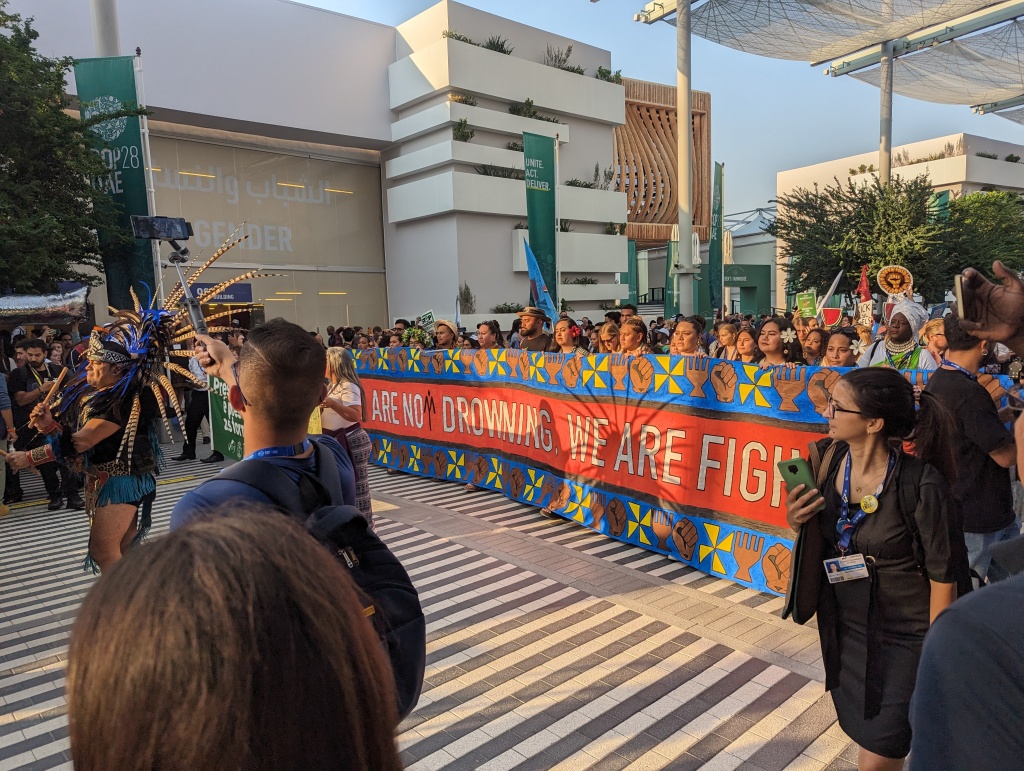
While the official negotiations of COP28 took place within the confines of the Blue Zone, a different kind of discourse resonated throughout the conference: the powerful chorus of climate justice. Despite media pronouncements suggesting the Loss and Damage Fund issue was settled, my experience at COP28 painted a different picture. The simmering frustration of vulnerable nations, bearing the brunt of a crisis they didn’t create, found its voice in the passionate protests that erupted outside the negotiation halls.
The voices of those most affected by the crisis – farmers in drought-stricken regions, and island nations threatened by rising tides – continued to demand more than just financial handouts. They called for a fundamental shift in power dynamics, a recognition of the historical injustices that fueled the climate crisis, and a commitment to building a future where the burden of adaptation wasn’t shouldered by those who contributed least to the problem.
Reflections and the Road Ahead
COP28 provided a platform to analyze the challenges and opportunities within the nexus of sustainable agriculture, climate action, and food systems. While the UAE Declaration and the Global Roadmap offer promising frameworks, their effectiveness will hinge on concrete implementation plans, equitable partnerships, and sustained political will.
As a future sustainability professional, I am committed to working towards a world where food production nourishes the planet, empowers communities, and mitigates climate change. My experience at COP28 has equipped me with valuable insights, but more importantly, it has ignited a passion for collaboration, innovation, and unwavering advocacy. The road ahead may be challenging, but the voices of farmers, scientists, activists, and students like myself will continue to rise, demanding a sustainable and just food system for all.
 Climate Blue