
As a former employee and scholarship beneficiary of an oil and gas company in a developing country, COP28 presented an intriguing paradox. This industry, notorious for historically denying climate science, was about to discuss its role in combating climate change. The setting was fittingly ironic – the oil-rich United Arab Emirates, chaired by an oil executive. Despite this, I held hope, eager to explore the industry’s potential to redirect its substantial capabilities toward global decarbonization, a move beyond superficial environmentalism – or “greenwashing”.
The opening event of COP28 struck like a lightning bolt. UN Secretary-General Antonio Guterres’s words echoed loud and clear, “We cannot save a burning planet with a firehose of fossil fuels.” He emphasized the need for a swift, fair, and equitable transition to renewable energies. Citing the Paris Agreement, he stated, “The science is clear: The 1.5-degree limit is only possible if we ultimately stop burning all fossil fuels. Not reduce. Not abate. Phaseout – with a clear timeframe aligned with 1.5 degrees.”
Echoing his sentiment, former U.S. Vice President Al Gore declared, “The climate crisis is mainly a fossil fuel crisis… solvable, but only if we stop burning fossil fuels.” These statements challenged the narrative often defended by oil and gas companies, which suggests that the problem lies in the emissions, not the fuels themselves. This begs the question: If phasing out fossil fuels is our future, where does that leave the companies producing them?
Global Stocktake: The beginning of the end for fossil fuels?
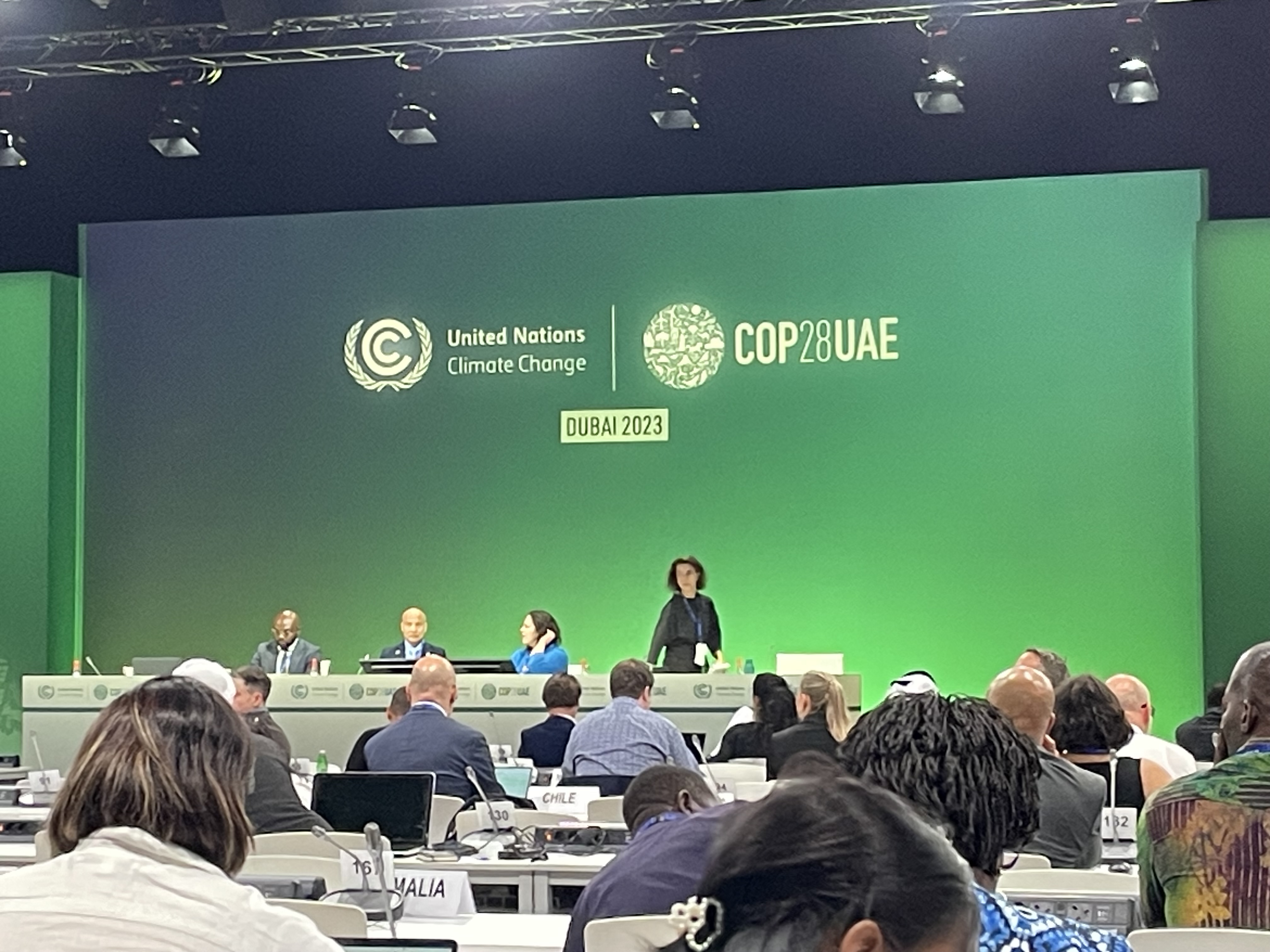
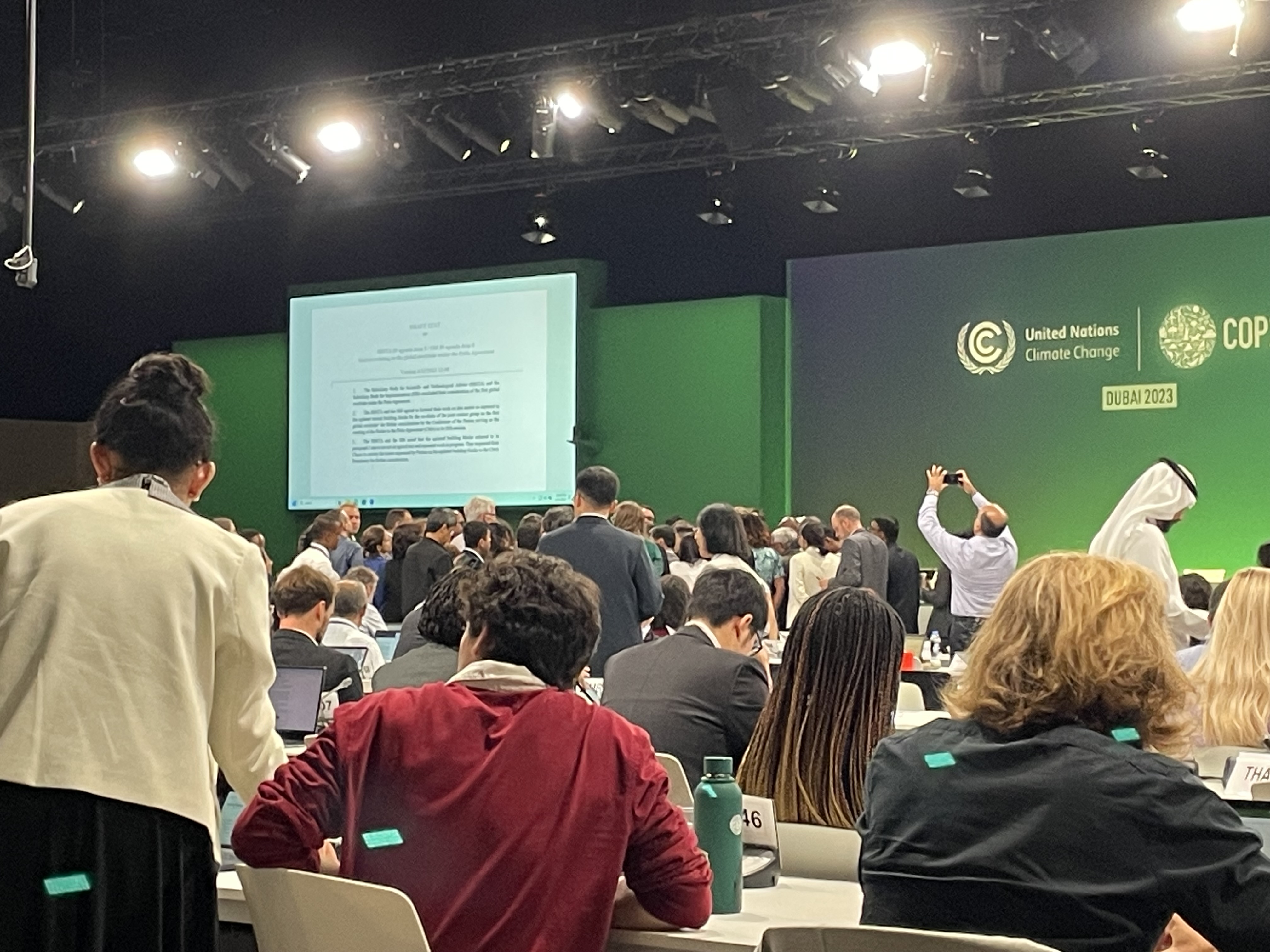
Eager for insights, I attended the Global Stocktake (GST) negotiations at COP28. The GST is a five-year cycle assessing progress against the Paris Agreement’s goals and informing new national climate pledges, known as Nationally Determined Contributions. The dynamics of these sessions varied – some were slow and monotonous, others pulsated with fervent negotiations. If you’re interested in the nitty-gritty of GST, check out this piece by CarbonBrief.
For the first time in the nearly 30-year history of COP summits, the agreement explicitly identified the root cause of the climate crisis – fossil fuels. However, the collective call to move away from fossil fuels failed to demand a complete phase-out, leaving some groups disappointed. Interestingly, the agreement recognizes the role of transition fuels, like natural gas, in facilitating global energy transition and maintaining energy security. This legitimizes natural gas consumption, despite concerns about natural gas being potentially more environmentally detrimental than coal due to methane leaks.
Tackling Methane Emissions
The agreement’s approval of transitional fuels draws attention to methane, a major component of natural gas contributing to one-third of current planetary warming. Considering methane’s potency and short lifespan, reducing methane emissions quickly could significantly slow the pace of global warming. Beyond the negotiations, COP28 marked significant commitments to reduce methane emissions. Over 150 countries have now signed the Global Methane Pledge, committing to a 30% reduction in human-sourced methane emissions by 2030. Furthermore, under the Oil and Gas Decarbonization Charter, companies responsible for 40% of global oil production have vowed to eliminate their methane emissions by 2050 and halt flaring by 2030.
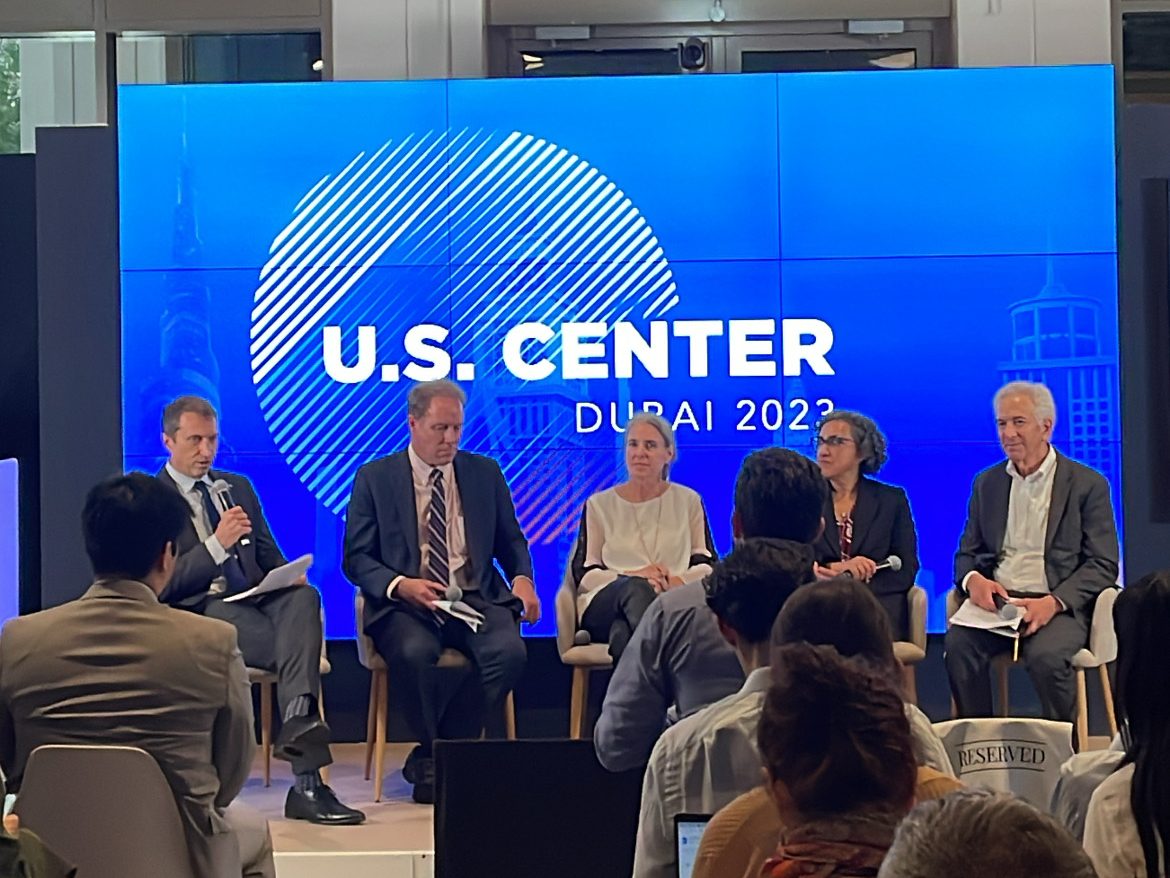
Regarding methane accountability, Fred Krupp (U-M alum) of the Environmental Defense Fund highlighted the need for accurate measurements. “One thing we’ve learned is when people estimate emissions, it’s a bunch of bull. When we measured we found that the numbers that were being reported to the EPA under EPA’s protocol were underestimates by 60%,” he stated. Rather than using phony estimates, he concluded by emphasizing the need for accurate empirical measurements aided by advanced monitoring technologies like the Methane Alert and Response System (MARS), MethaneSAT, and Climate TRACE.
Final Reflections
Attending the climate summit was an eye-opening experience, prompting both appreciation and skepticism about the effectiveness of COP in battling a crisis of such magnitude. The slow pace of diplomacy and the tediousness of negotiations stand in stark contrast to the urgency of the climate crisis. Additionally, COP’s consensus decision-making model could potentially skew the balance of power in favor of global superpowers and developed nations.
Despite these concerns, there’s no denying that the conversations are moving in the right direction. The world is addressing the elephant in the room – fossil fuels. However, cutting through the delusional optimism, the stark reality is that the world’s energy demand is only going to rise drastically. Oil and gas are here to stay for the foreseeable future. We now rely on fossil fuels for 80% of our needs, a figure that hasn’t changed in the last 30 years.
The real challenge lies in converting commitments into ambitious, transparent, and accountable actions. If we can construct marvels like the Burj Khalifa and Palm Jumeirah in a desert, we certainly possess the capabilities to tackle climate change. It is a monumental task, but one we cannot afford to ignore.

Contact: shuhaib@umich.edu
 Climate Blue