
Climate change is exacerbating the gender divide
Approximately half of the world’s GDP is dependent on the sustainable management of ecosystems. With 1.2 billion jobs in farming, fishing, forestry, and tourism at risk due to climate change, up to 158 million more women and girls may be pushed into poverty globally by mid-century––16 million more than the total number of men and boys.
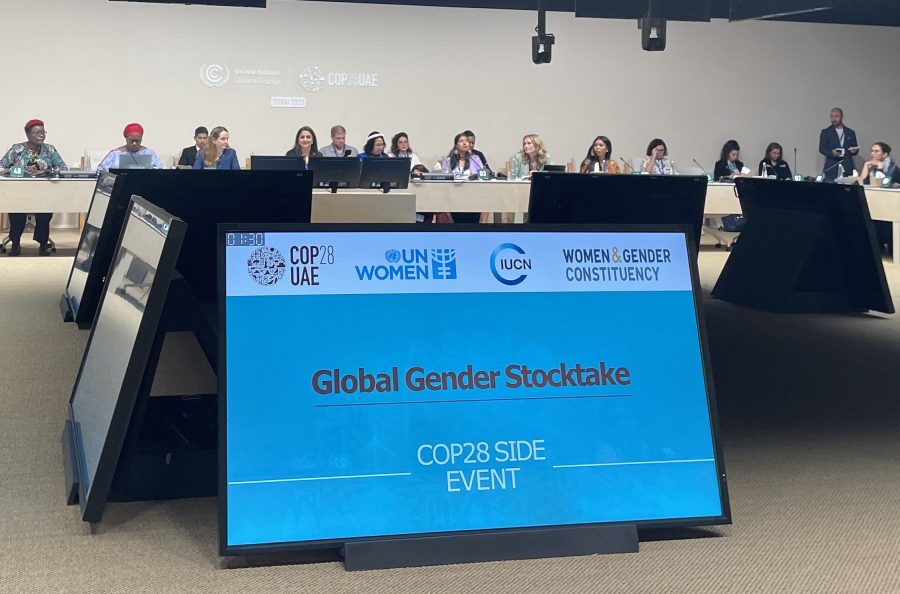
To counter such adverse outcomes, we need gender-responsive data to better assess the impacts of climate change on women and girls and implement safeguards to ensure women are fully represented in the just transition. As UN Women’s Chief of Economic Empowerment Dr. Jemimah Njuki stated at the COP28 Global Gender Stocktake, “the full participation of women and girls is not a favor to them. It is their right.”
The need for gender-responsive data
In many parts of the world, women are at the front lines of the worst effects of climate change. For example, during periods of drought women must walk farther distances to gather food and water for their communities, and in the wake of climate disasters, they often face increased violence. However, we simply do not have enough data to fully understand the scale or impacts of climate change on women and girls.
Historically, gender-responsive data hasn’t been a priority of the UNFCCC, with only 10 SDGs referencing gender (and only two of these possessing data to inform progress) and 55 NDCs including actions related to gender equality. In the COP28 Presidency Global Gender Stocktake, panelists reiterated the need to gather and analyze gender-responsive data. Without it, the policies we implement will be lacking and the measurement of outcomes will be inaccurate.
To set the stage for ambitious gender-responsive action, the Global Conference on Gender and Environmental Data published an urgent call for action on the eve of COP28. The call to action urges world leaders, policy makers, and civil society actors to:
- Promote and prioritize the production of gender and environmental data in an ethical and transparent manner;
- Accelerate the use and uptake of gender and environmental data for decision making, programme development, monitoring, research and advocacy;
- Fund and invest in the production and use of gender and environmental data;
- Ensure that national, regional and global data and statistical governance processes are inclusive;
- Build and strengthen multi-stakeholder partnerships for gender and environmental data.
While this call to action makes important strides towards gender equality, gathering data is not enough. We need to continue to ensure women are represented in the just transition and their unique needs and circumstances are taken into consideration. As Senator Abello Alfonso from the Federated States of Micronesia noted at the Global Gender Stocktake, “women have different challenges and bring different solutions.”
A just transition must include women and girls
In order to further progress on gender-responsive initiatives, the COP28 Presidency launched the Gender-Responsive Just Transitions & Climate Action Partnership on COP28’s Gender Equality Day. This partnership, endorsed by 68 parties, includes a package of commitments on finance, data, and equal opportunities that will be reassessed in three years at COP31. Such commitments are urgently necessary, as highlighted by the staggering statistics shared by Dr. Njuki at the COP28 event “Pathways and Lessons Learned to Leading a Just Transition Work Programme”:
- More than 80% of new green jobs are in sectors dominated by men.
- 18% of girls are pursuing STEM careers compared to 35% of boys.
- Only 32% of renewable energy jobs are held by women.
- Only 23% of manager positions in the renewable energy sector are held by women.
- Only 10 out of 65 countries referencing just transitions in their NDCs mention gender equality.
- Only 0.01% of climate finance addresses the intersection of climate and women’s rights.
While disappointing, these statistics aren’t surprising. Over and over, research shows women around the world receive less education and fewer promotions than men. Additionally, women and girls often get left behind as their work is more invisible, whether through the care economy or domestic work. In fact, if the current gender gap in power and leadership positions remains entrenched, the next generation of women will still spend on average 2.3 more hours per day on unpaid care and domestic work than men.
Women are also underrepresented at COP: 35% of attendees are women, a mere 5% increase in representation since the first COP in 1995. We need to ensure women around the world have the support systems in place to help them gain and maintain positions of leadership so they can be more fully represented at the table. However, in many countries, women are unable to hold such positions of power, and when they do, they often face hostile environments that make staying in power challenging, if not impossible.
But things aren’t entirely dire. The proportion of seats held by women in national parliaments has increased by 14 percentage points since 1997. From 2000 to 2020, the global maternal mortality ratio declined by 34%. More than two-thirds of countries have reached gender parity in primary school enrollment.
As one of two women in Micronesia’s National Congress (with the first woman elected in just 2021), Senator Alfonso’s presence at COP is a poignant example of what can happen when more women come to the table: they advocate for those who have been historically left behind.
 Climate Blue