
The world’s biggest climate meeting, the United Nation’s 28th Conference of the Parties (COP28), concluded in Dubai with new agreements set on handling the climate change crisis. Negotiators agreed on topics like funding aid for those most vulnerable to climate change, transitions away from fossil fuel, investment in alternative energy sources, etc.
During the first week of the COP28, the Declaration to Triple Nuclear Energy was launched during the World Climate Action Summit. The declaration demonstrates a rising global consensus on the need to scale up technology like nuclear energy to achieve climate change goals. With an early agreement between 22 countries and industry in 140 nations, rumors swirled as some in Dubai began labeling COP28 the “Nuclear COP.”
For the first time since nuclear energy was the lone technology excluded from the Kyoto Protocol, there was quick consensus on tripling nuclear energy development and capacity. The Declaration to Triple Nuclear Energy marks the first-time nuclear energy was specified as a climate change solution in a COP agreement. This agreement recognizes the significance of nuclear energy in achieving net-zero greenhouse gas emissions by 2050. As the name of the declaration indicates, the core elements include:
- Strategic Collaboration: Commitment to triple nuclear energy capacity by 2050
- Financial Advocacy: Rallying shareholders in international financial institutions to include nuclear energy in energy lending policies.
Beyond the declaration, the Global Renewable and Energy Efficiency Pledge recognized that nuclear energy will have a critical role in decarbonizing the energy sector. Additionally, over 120 companies who attended COP28 (active on over 140 nations) signed the Net Zero Nuclear Industry Pledge, demonstrating significant industry backing.
At COP, Dr. Sama Bilbao y León, Director General, World Nuclear Association announced, “Nothing less than this ambitious – but achievable – target will be enough to deliver the scale of contribution needed from nuclear energy to achieve sustainable economic development and avert the devastating consequences of unchecked climate change.”
While a victory for nuclear, finances and public opinion create barriers for nuclear goals
Nuclear has some large hurdles to overcome before 2050 that make the Declaration to Triple Nuclear Energy even more ambitious. Financial investment is lacking and somewhat negative public opinion on nuclear energy safety slows down development.
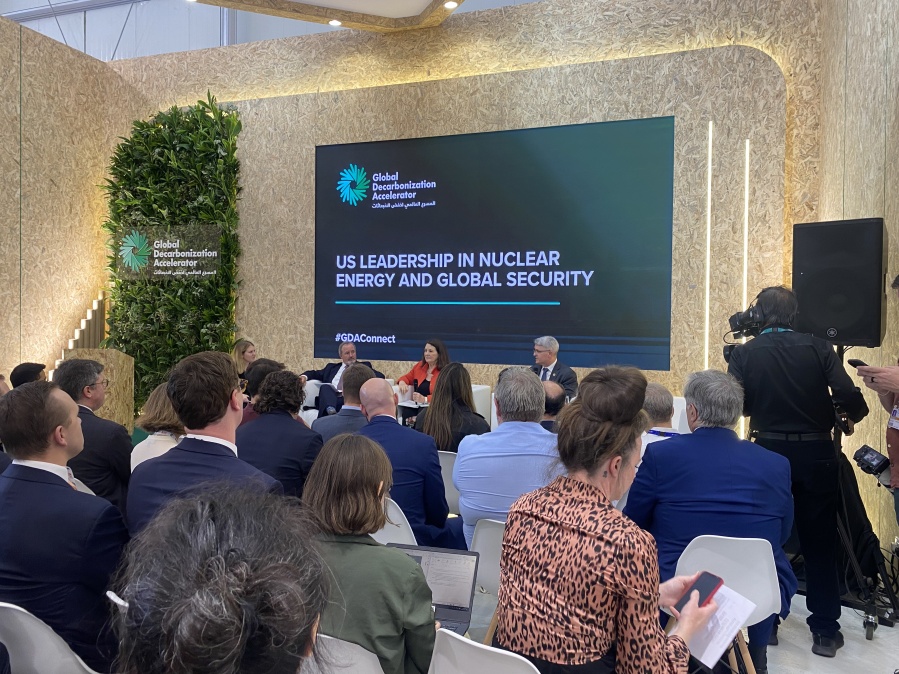
At an Atlantic Council panel, Jennifer Gordon, Director of the Nuclear Energy Policy Initiative, explained the most significant challenge with nuclear comes from the cost of being first:
“It’s hard to be first – the first thing is also the most expensive, there are naturally more problems to work out, that is why nuclear needs to be a mix of government and private funding.”
In advanced economies (with 70% of the global nuclear capacity), investment often stalls due to cost and time. The price of building reactors rose so much over the past few years from increasing interest rates and inflation, many projects were cancelled. Additionally, nuclear power plants are slower to build than many other renewable power plants. That is why, world leaders used the Declaration to Triple Nuclear Energy to call on international financial institutions like the World Bank to help finance these projects. This would allow governments to assume some of the risk of nuclear plants and allow space for them to incentivize development.
Nuclear is expensive, controversial, and will face increased competition as renewable energy development grows. At COP28, an Australian Minister highlighted that opinions on nuclear may be moving in a more favorable light with young people as stronger proponents for nuclear energy options.
Nonetheless, public opinion creates challenges for nuclear plant development. While COP28 was replete of panels and dialogues with proponents of nuclear energy, messaging on the topic is incredibly mixed. Concerns over nuclear safety, radioactive waste management, and the potential for weapon proliferation are often at the forefront of people’s minds. Nuclear accidents like the 1986 Chernobyl disaster and the 2011 Fukushima Daiichi disaster exacerbate concerns over safety of these plants.
Whether an accurate gauge on global opinion or not, the messaging for nuclear at COP28 was generally favorable. The Atlantic Council’s nuclear discussions hosting primarily members from the American congress delegation focused on U.S. over-investment in renewables. Many recommended commercializing nuclear on a larger scale to increase energy security and create affordable energy options. Many times, promotion of nuclear energy is pushed as a national security issue. Dr. Katherine Huff from the Office of Nuclear Energy explained how U.S. priorities are to triple nuclear power by 2050 and incentivize and create goals for design and application of nuclear energy plants.
Is the Declaration to Triple Nuclear Energy doomed to fail?
The COP28 pledge is costly and takes time. A deadline of 2050 requires speed and efficiency, something often difficult to obtain with global forums like COP. The Declaration to Triple Nuclear Energy by 2050 calls upon the World Bank, regional development banks, and international financial institutions to include nuclear in lending policies. It also pushes the need to secure supply chains to increase technology development. If these calls are heeded, some of the financial hurdles are mitigated, but the public opinion needs a revamp as well and that will take time.
There is no doubt COP28 saw real progress on nuclear power as a viable and necessary mechanism to aid in the fight against climate change. But realistically, there are many upcoming challenges if world leaders want the Declaration to Triple Nuclear Energy to succeed.
 Climate Blue