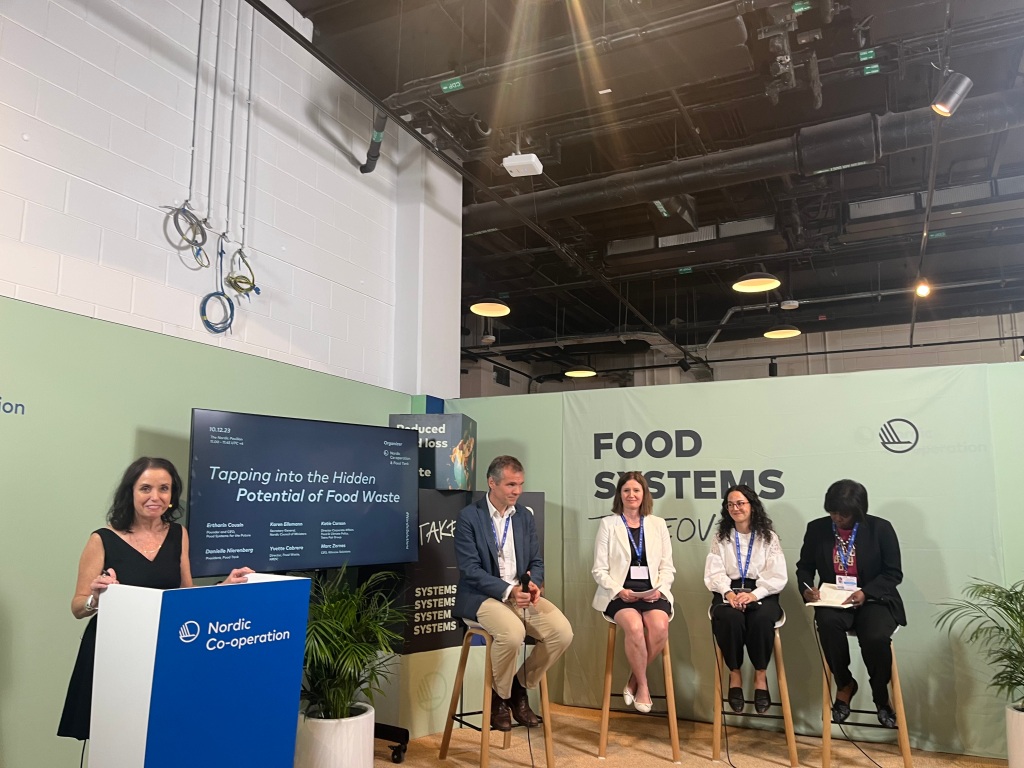
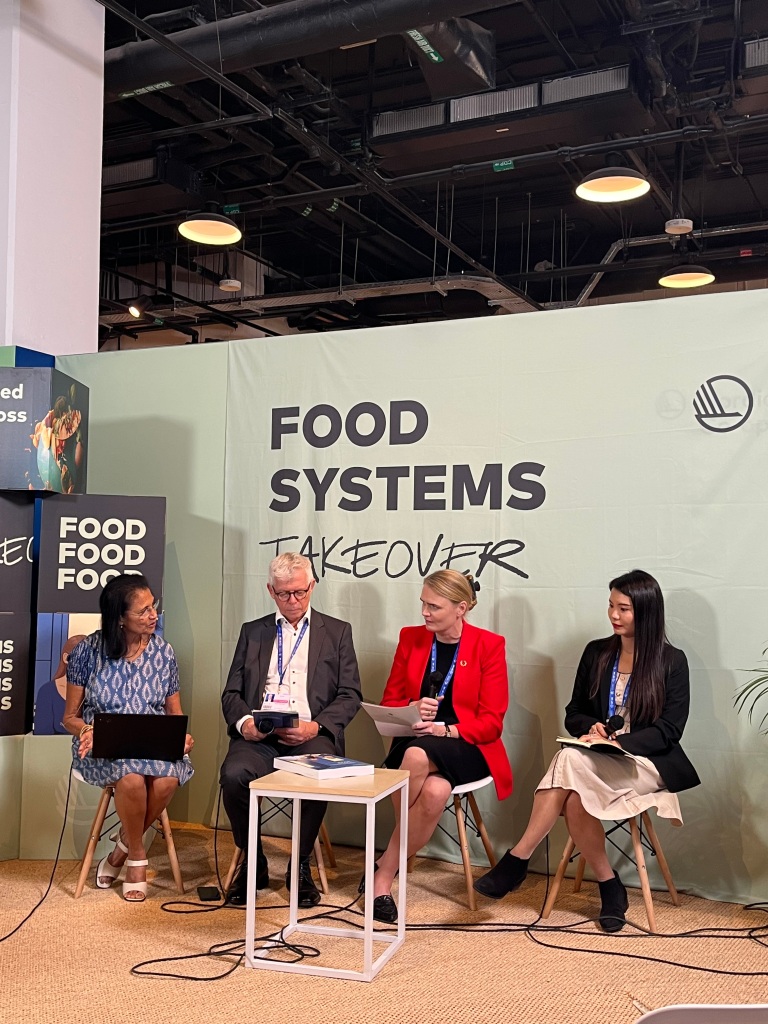
Tapping into the Hidden Potential of Food Waste Panel at COP28
For the first time in COP’s history, an entire day was dedicated to discussion on emission reduction in food and agriculture which account for one third of all CO2 emissions (Food & Resiliency Food Production and Partnerships, COP28). We’ve all heard time and again, the solution is to simply reduce our individual red meat consumption. But doing so relies on the collective sum of individual choices. Doing so puts the cost and burden on singular individuals rather than making it the primary and most accessible option to the masses. At COP28, the conversation switched from what consumers can do to what food producers must do. We are what we eat and as such, the solution must start at the source.
“Food is a natural resource that must be protected.”
Following COP28, I attended another food and agriculture conference, MBArk2Boulder, in Boulder, CO. A representative from TerraCycle quoted an international study they had conducted on consumer awareness and willingness related to climate change. The conclusion of the survey was clear, consumers are ready and willing to make adjustments to their daily practices to address climate change. But the options aren’t yet there at scale to make this shift possible. The problem is not consumer readiness but corporate willingness; which will likely be influenced by current and impending regulations on Green House Gas emission disclosures. In the past, we needed to prioritize scale at low cost to ensure enough food production to meet the masses. That is no longer the issue. Now, we must replenish the resources required to produce food and increase its natural quality for the betterment of human health and the Earth.
“As food producer, we have no other choice. We cannot wait for consumers to drive change. We must lead change.”
So what’s the solution? The United States Department of Agriculture has invested millions of dollars (USD) in sustainable farming. Dubai recently opened the world’s largest hydroponic farm (Bustanica Facility). And livestock farmers in the UK have started converting into cultivated protein farms (Cellular Agriculture LTD). Regardless of the solution, the focus is clear–we must start at the source. When we change how and what we produce, we change the entire system. Only then can we expect to incur a consumer domino effect strong enough to combat the climate mess we are currently in.
“This system is going to make a bigger impact on the larger system.”
There are many polarizing views about COP28 and its effectiveness. Over and over again, I heard “this system is broken.” But I also heard the famous slogan from COP27, “We have not yet been defeated.” The energy, enthusiasm, and drive showcased by individuals during the food and agriculture theme day showed there is still hope and a belief that if we make infrastructural changes to the way we think about and produce food, we can catalyze a lot of other initiatives surrounding Green House Gas emission reduction.
“We need to put this great machine (agriculture) into the service of climate change.”
Moises Savian, Secretário de Governança Fundiária, Desenvolvimento Territorial e Socioambiental no Ministério do Desenvolvimento Agrário e Agricultura Familiar
These solutions do not go without their set of hurdles. Diets kill 22% of people worldwide simply due to what they have access to and the quality of the infrastructure in place to support it (Enhancing Food & Nature Linkages for Climate Action, COP28). In the global south, a quarter of all food produced is lost due to lack of storage and refrigeration access (Tapping into the Hidden Potential of Food Waste, COP28). This was heightened during the COVID pandemic when food transportation was limited to daylight hours. We need to focus on community level solutions that improve the production, transportation, and preservation of food and the natural systems that create it. Legislation like that of the Vermont food waste ban has helped to alter decisions and perspectives of waste, rerouting material that would have otherwise been thrown away to food banks; donations tripled when it was implemented (Tapping into the Hidden Potential of Food Waste). If we want to change the conversation, government entities, organizations, and corporations alike need to invest in converting food infrastructure away from the most cost effective option to the most climate rejuvenating option and not place undue burden on small scale producers and farmers.
“Over 80% of farmers in the world, do not have access to basic financing, but we put the burden on them.”
COP28 gave food and agriculture the spotlight it needed to become an impactful part of the climate change conversation. We must work together as businesses, organizations, governments, and individuals to change our long-developed habits around food. Food is a living thing just as we are. It deserves our attention and dedication. It deserves the best we can provide. Profits and sustainment will follow if we prioritize the health of food.
“We can have profits and community and nature and do it all together.”

 Climate Blue