
For context, Conference of Parties (COP) is a gathering of the world’s governing bodies and leaders where they meet to discuss regulation, and policy that attempts to mitigate, adapt, and build resilience against climate change. I would argue that the goal of COP is to resolve the issues brought forth by climate change, others would disagree. This past year I had the privilege to attend COP28 (the 28th meeting of COP), through the University of Michigan Climate Blue Delegation with 15 other University of Michigan students. COP28 was held in Dubai, UAE, over two weeks, from November 30th to December 13th, 2024, where I attended the first week. This blog post will be covering what I learned, and experienced at COP28, along with some key takeaways. My focus at COP28 was primarily on the Loss and Damage, Global StockTake, (GST) and Nuclear, meaning most of what will be covered is on those topics. I will end the blog with what I believe is most important in enacting change in policy based on my COP28 experiences.
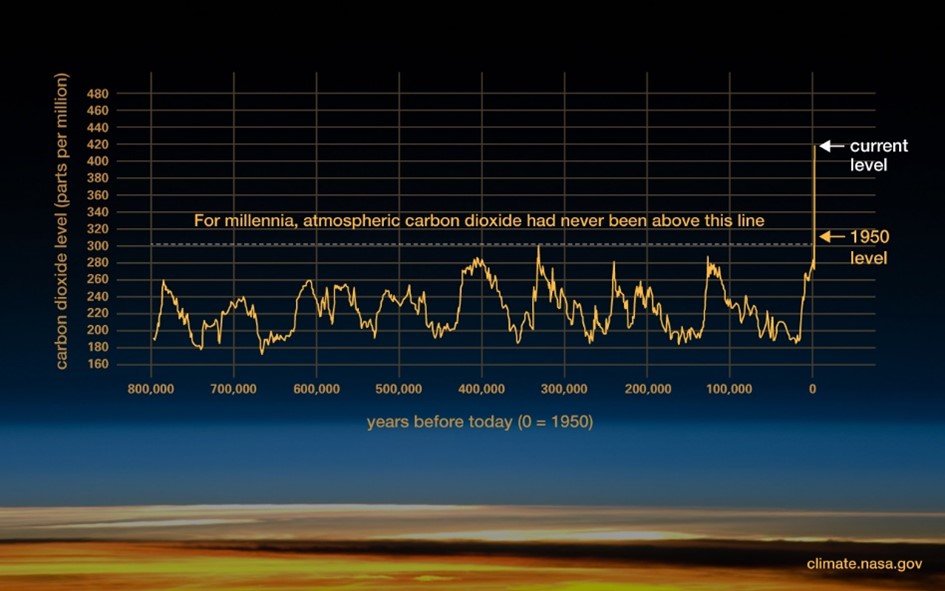
Climate change is a global problem proven through science over many decades, that is easily and expansively explained through a few parameters. It should be noted that climate change is a highly complex integrated system of problems and reducing it to a few mere numbers doesn’t encapsulate the full picture. However, for brevities sake, those few parameters do provide a clear picture that climate change is real and becoming worse. Those parameters are usually discussed as: global carbon emissions, rising sea levels, unstable severe weather patterns, mass extinctions, and global average temperature rise.
Some potential tools and technologies that can be directly implemented to combat climate change are (but not limited too): Renewables, Nuclear, Hydro-power, Carbon capture, and Biofuels. Each has their own benefits and drawbacks, but all-in-all, no one solution can completely “solve” the climate change issue. That means a combination of some, or all varieties of technological solutions must be employed. For example, in terms of energy, that would be to have diverse energy production of carbon neutral power systems in each locality, to create a stable and resilient electrical grid. The approaches discussed here are from a technology mitigation viewpoint which was the general focus of COP and governments during the 1990s, and 2000s. However, focus on adaption, and resilience policy to climate change has been gaining much need attention the past decade. Climate justice has also received growing attention which, in one sense, calls for developed countries with large historic carbon emissions, like the US and some European countries, to help developing countries to transition over the heavy emitting stage.
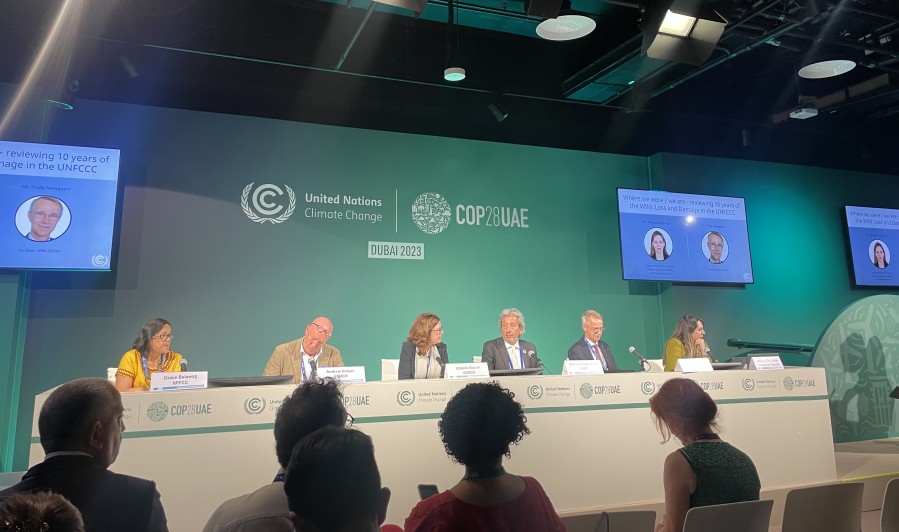
Loss and damage made major progress at COP28 with the operationalization of the Loss and Damage fund, a fund that helps developing countries overcome and cope with climate change. Optimism was brimming in the conference room during the 10-year review of Warsaw International Mechanism for Loss and Damage that occurred the following day after the realization of the fund, but the panelist made sure to remind everyone that there is still a long way to go. A quote from one of the panelists that stuck with me was, “Adaption is showing our failure in mitigation, and loss and damage shows our [negligence] in adaption and mitigation.”
The first ever Global StockTake took place at COP28 where all countries participating in the United Nations Framework Convention on Climate Change (UNFCCC) must provide statistics on if they are achieving (or not) their Nationally Determined Contributions (NDCs). NDCs are a set of goals that each country self-imposes in an attempt to reduce the causes of climate change. In other terms, countries set their NDCs for the Paris Agreement during COP21 where keeping average global temperature increase to less than 1.5 degrees (Celsius) was the fundamental goal. The Global StockTake is the means to see if countries are living up to their original NDCs, and if they aren’t, what changes must be made to rectify. Spoiler alert, “implementation of the Paris Agreement is lacking across all areas and [is] not where it should be.” [from UNFCC on GST from COP28]. On the other hand, the first Global Stock Take did take direct aim a fossil fuels (this is a first and major step in formal wording) by calling on parties to contribute to, “Transitioning away from fossil fuels in energy systems, in a just, orderly and equitable manner.”
Nuclear energy made headlines at COP28 with 24 countries (as of today) pledging to “triple nuclear capacity” by 2050. Spearheaded by the US, the “Declaration Recognizes the Key Role of Nuclear Energy in Keeping Within Reach the Goal of Limiting Temperature Rise to 1.5 Degrees Celsius.” This was huge news that honestly came out of nowhere, no one was expecting this but it’s great for realizing a dynamic power and electrical grid, discussed prior. Grid inertia and stability require fast, reliable, and immediate power, something renewables (not including hydro) lack. However, it’s not all good news, according to S&P Global Commodity Insight’s analysts, “Total installed nuclear capacity of around 375 GW in 2020 is forecast to rise to 458 GW in 2023, 549 GW in 2040, and 631 GW in 2050. China and US make up over half of the global total by then.” This means that the goal of the pledge is ~1200 GW, at the current rate nuclear capacity is growing it will be ~600 GW if all nations on the planet are included (ie. China, which China is not part of the pledge), leaving a 600 GW deficit at current growth estimates. Making up the 600 GW growth deficit isn’t impossible but will require popular support from the general populous of countries signed on, a tall order.
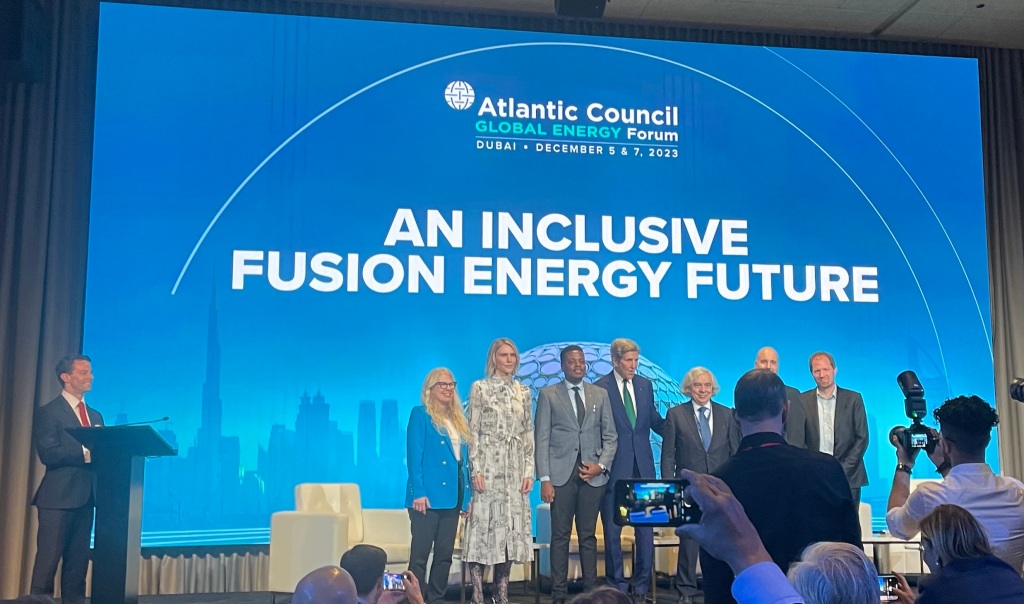
During the Atlantic Council Global Energy Forum, the US, represented by John Kerry the US Special Envoy for Climate Change, announced its International Engagement plan for Fusion Energy with 5 main pillars: Research and Development, Supply and Market, Regulation, Education, and Work force. The primary goal is to have nations and private industry work globally together to achieve commercially viable nuclear fusion energy, the holy grail of clean limitless energy that would put an end to climate change and energy/power concerns if it was feasible (spoiler, commercial viability is the catch). Still though, for fusion energy to have such a huge event and announcement/pledge shows that the up-and-coming technology has some serious traction.
To wrap up, while at COP28 I learned that accountability is what governments and world leaders require. The best way to maintain accountability is to educate the public (the people, the populous, etc.) on science, technologies, and policies that can mitigate and adapt human society to climate changes effects. Climate change, in my opinion, must be addressed with a bottom-up approach, from a local scale to an international scale. Optimization of each locality in the movement of abating, combating, and adapting to climate change must occur first before global efforts (or even nationwide) become effective. The public must become aware (educated or taught) of climate change science, policy, regulation, and the technologies that can and or are utilized to hold their policy makers, politicians, and leaders accountable. Accountability combats hypocrisy and the public are the only force that can oppose the blatant verbose of insincere commitments of those who have the power to make change (note: not all commitments by policy makers are insincere, but it gets old when grandiose claims are made that are, in reality, impossible or not helpful to achieve in context of climate change). One of the easiest ways to enforce that accountability is to go out a vote, and make your leaders know your stance.
I would like to thank the University of Michigan, and Climate Blue for granting me the opportunity to attend COP28.
References and Links:
- Climate Change statistics:
- Luthi, D., et al.. 2008; Etheridge, D.M., et al. 2010; Vostok ice core data/J.R. Petit et al.; NOAA Mauna Loa CO2 record. Some description adapted from the Scripps CO2 Program website, “Keeling Curve Lessons.” https://climate.nasa.gov/climate_resources/24/graphic-the-relentless-rise-of-carbon-dioxide/
- https://climate.nasa.gov/evidence/
- Is the (US) Electrical Grid prepared for climate change? Comments on Grid stability and Renewables
- Nuclear Energy and climate change:
- https://www.nei.org/advantages/climate
- https://www.spglobal.com/commodityinsights/en/market-insights/latest-news/electric-power/120223-cop28-22-nations-pledge-to-triple-nuclear-generation-capacity-by-2050
- https://www.energy.gov/articles/cop28-countries-launch-declaration-triple-nuclear-energy-capacity-2050-recognizing-key
- Carbon capture science, tech, and current usage for climate change:
- Climate Change education:
- Climate Change Hypocrisy:
- https://insideclimatenews.org/news/11122023/us-climate-activists-at-cop28-slam-their-home-country-for-hypocrisy/
- https://www.pressenza.com/2023/12/hypocrisy-sours-cop28/
- https://www.smh.com.au/environment/climate-change/bowen-calls-for-end-to-fossil-fuels-with-just-days-to-break-cop28-deadlock-20231211-p5eqgc.html
- https://www.forbes.com/sites/michaellynch/2023/12/01/cop28-will-generate-headlines-but-not-much-else/?sh=23f9bccd1506
- https://www.reuters.com/business/energy/move-away-hypocrisy-global-south-demands-energy-justice-2023-02-07/
- Loss and Damage:
- Global StockTake:
- https://unfccc.int/topics/global-stocktake/about-the-global-stocktake/why-the-global-stocktake-is-important-for-climate-action-this-decade#What-does-the-global-stocktake-tell-us
- https://unfccc.int/sites/default/files/resource/GST_HLE%20branded%20V2.pdf
- https://unfccc.int/process-and-meetings/the-paris-agreement/nationally-determined-contributions-ndcs
- https://unfccc.int/sites/default/files/resource/cma2023_L17_adv.pdf
 Climate Blue