

Triple Nuclear Energy Capacity by 2050
This has been a huge year for the nuclear industry, especially considering the events that took place at COP28. The effects of climate change continue with rapid and severe environmental alterations, such as escalating global temperatures and more extreme weather events, which are already affecting ecosystems, human health, and economies worldwide. The urgency is underscored by the need to drastically cut carbon emissions to mitigate these impacts and meet international climate targets. The pope has even declared climate inaction to be a sin. Nuclear energy emerges as a critical component of the climate solution because it produces electricity with significantly lower greenhouse gas emissions during operation compared to fossil fuels, making it a strong ally in the fight against global warming. Furthermore, nuclear energy provides a reliable power supply that does not fluctuate with weather conditions, unlike solar or wind power. This reliability is crucial for maintaining a consistent energy supply to meet both every day and peak demands, particularly in heavily populated or industrial areas. Moreover, advancements in nuclear technology, such as the development of small modular reactors and the exploration of fusion energy, present opportunities for even safer and more efficient energy production in the future. By integrating nuclear energy with renewable sources, we can form a robust energy mix capable of supporting long-term sustainable development and reducing our carbon footprint. This balanced approach not only addresses the immediate challenges posed by climate change but also secures a pathway for future energy stability and independence.
At COP28, a wide array of nuclear-focused discussions, panels, and presentations took center stage, bringing together policymakers, industry leaders, researchers, and activists. These events highlighted the evolving role of nuclear energy in the global energy mix, underscoring its potential to contribute significantly to decarbonization efforts. The most important action was the ambitious announcement to triple nuclear power by 2050. This goal aligns with urgent global climate objectives and strategic energy policies in the U.S., and resonates with academic institutions like ours, emphasizing the integration of theoretical research with practical applications in energy policy and technology. The discussions extended into policy and regulatory frameworks necessary for nuclear energy’s expansion. There were detailed explorations on how to streamline licensing processes for new reactors and create policies that encourage investment in nuclear infrastructure. Such policy adjustments are crucial for facilitating the rapid scaling needed to meet the tripling target by 2050. Moreover, sustainability and safety were also at the forefront, with numerous workshops dedicated to enhancing safety standards, improving waste management techniques, and mitigating the environmental impacts of nuclear energy production. These workshops emphasized the need for robust safety protocols and advanced engineering solutions that could address both the operational risks and long-term sustainability concerns associated with nuclear power.
One of the highlights was the showcasing of technological innovations, particularly Small Modular Reactors (SMRs) and other next-generation reactors. These sessions provided insights into how these technologies could make nuclear energy safer, more economical, and adaptable to various applications, from powering large grids to providing energy in remote locations. The Korean Hydro Nuclear Company had an impressive showcasing of the technologies installed at the Barakah Nuclear Power Plant and new ideas for SMR technology.
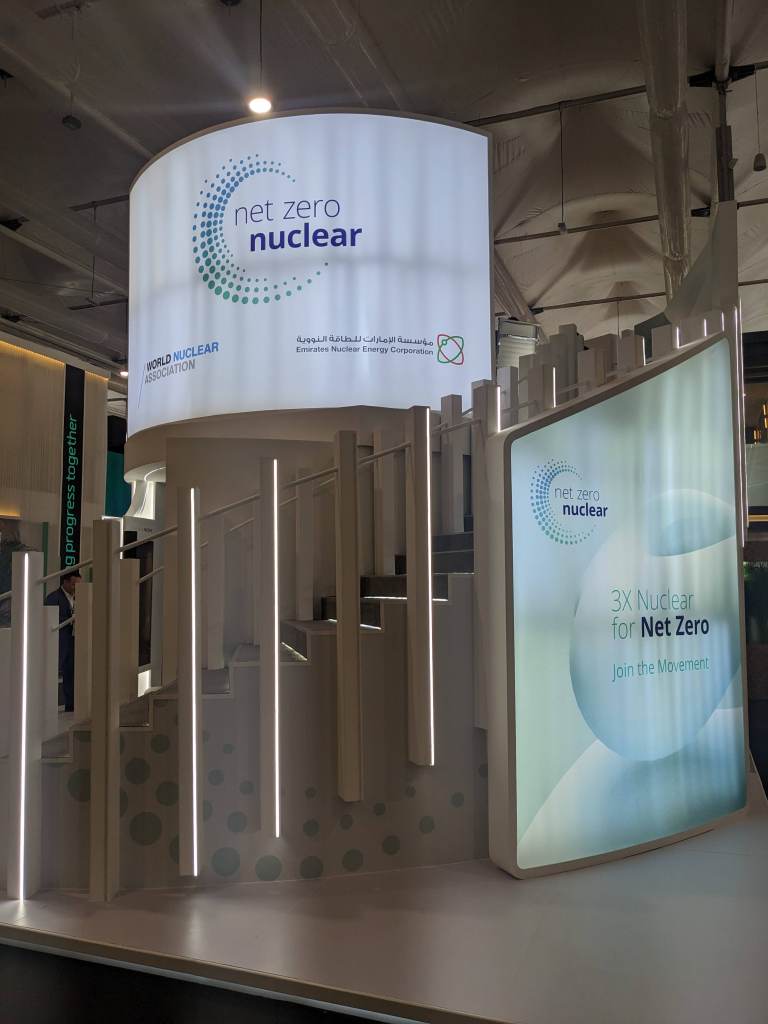
Public engagement and the acceptance of nuclear energy also featured prominently in the forums at COP28. These sessions were particularly aligned with my research, emphasizing the importance of transparency, education, and community involvement in nuclear projects. The discussions revolved around strategies to improve public perception and involve communities directly in the decision-making processes. This approach is vital for gaining and maintaining public trust, which is essential when expanding nuclear facilities and deploying new technologies.
To achieve the ambitious goal of tripling nuclear power by 2050, a multifaceted approach is required. First, continuous innovation in nuclear technology is crucial. This includes not only the development of SMRs but also advancements in safety measures and waste management solutions that can meet the stringent requirements of a modern, safety-conscious world. Secondly, there is a significant need for regulatory support. Regulatory frameworks must be updated and harmonized to support the development and deployment of new nuclear technologies at scale. These changes should reduce bureaucratic hurdles while maintaining the highest safety standards, creating a conducive environment for growth in nuclear energy.
Moreover, increasing public acceptance is essential. This can be achieved through transparent communication and inclusive decision-making processes. Engaging communities not just as bystanders but as active participants in nuclear energy projects is critical. This includes educating the public about the benefits and risks of nuclear energy, addressing common misconceptions, and demonstrating the role of nuclear power in achieving a sustainable and low-carbon future.
The discussions at COP28 made it clear that nuclear energy is not just a supplemental power source but a central component of the strategy to combat climate change. The conference served as a powerful reminder of the scale of action required and the collaborative effort needed from all stakeholders, including governments, academia, industry, and communities. As I continue my academic journey, the insights gained from COP28 will undoubtedly influence my approach to fostering community-centered nuclear energy solutions. These experiences have not only reaffirmed my commitment to my field but also highlighted the critical role that emerging technologies and community engagement play in the broader energy landscape.
This holistic approach, combining technological innovation, regulatory reform, and community engagement, forms the cornerstone of the ambitious plan to expand nuclear power. It reflects a growing recognition of nuclear energy’s potential to provide stable, reliable power while minimizing environmental impacts. As the world strives to meet its energy needs and reduce carbon emissions, nuclear power stands out as a promising and necessary solution that can meet large-scale energy demands without compromising on safety or sustainability. The commitment at COP28 to significantly increase nuclear capacity by 2050 is a bold statement of intent, one that challenges us all to rethink our approaches to energy production, technological development, and public engagement in the quest for a cleaner, greener future.
 Climate Blue