
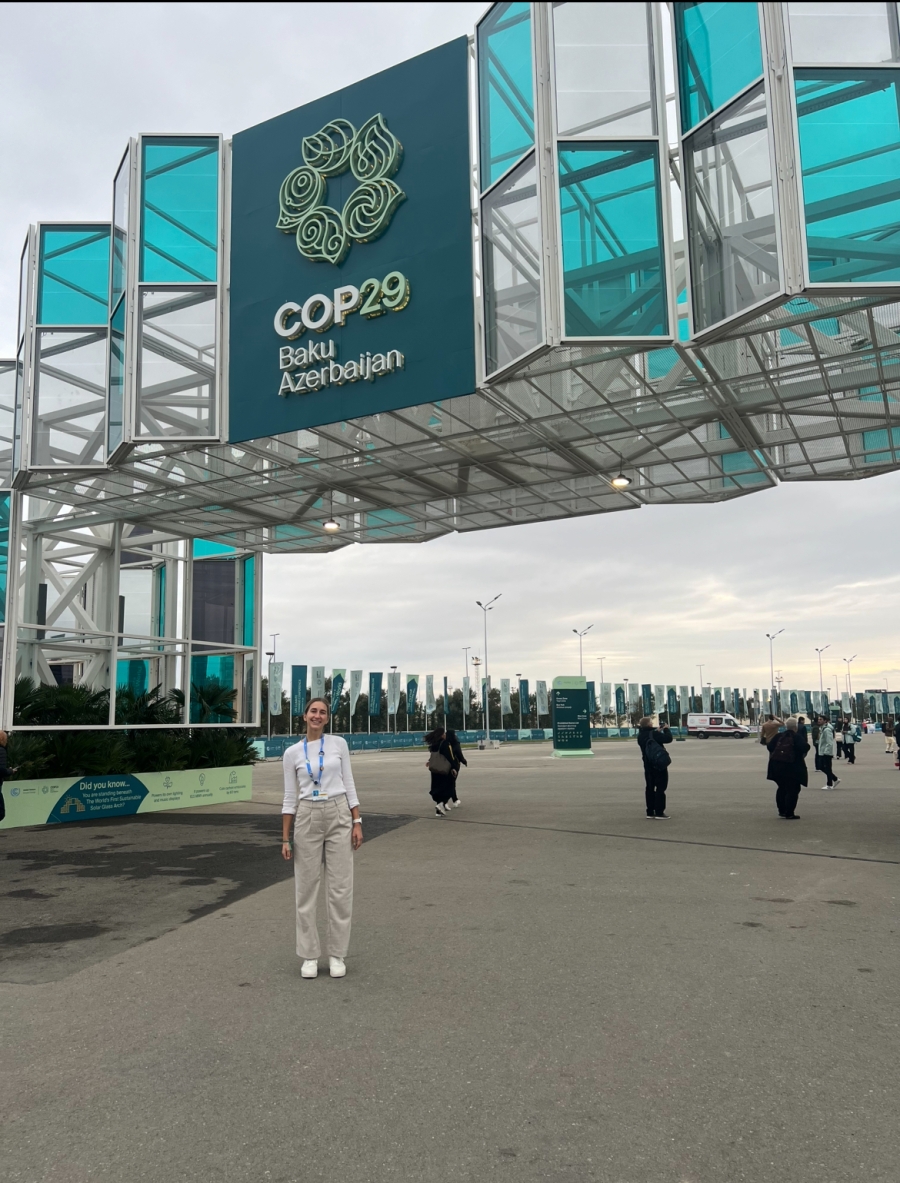
The packed bus lurched forward as I gripped the railing, trying to steady myself in the dense crowd of delegates, activists, and observers leaving the venue at COP29 in Baku. Exhaustion hung in the air, but so did an unspoken camaraderie. A gentle tap on my arm—a man with kind, tired eyes and a red scarf gestured for me to take his seat.
I hesitated, but his insistence was unwavering. I thanked him and sat down, and as the bus rumbled through the dimly lit streets, we struck up a conversation. He was from Iran but now lived in Dubai while advising the Ugandan government on climate negotiations. His story unfolded as a testament to his resilience—fleeing Iran in 1979, studying political science in Geneva, building a career in finance and investment; and then, in what should have been a time for retirement, dedicated his life entirely to climate action.
He had attended 15 COPs and he reflected on his favorites—Copenhagen and Paris. His experience gave him a pragmatic view of progress. “Of the hundred steps we need to take, maybe we’ve taken 12,” he admitted, “but we are moving. Getting 198 countries into the same ‘room’ and getting them to agree on anything is a feat in itself.”
Despite years of navigating international negotiations, he remained hopeful. What frustrated him the most, however, was the pageantry—the high-level officials arriving for their moments of glamour, shaking hands for the cameras while the real work happened elsewhere, often in the margins, in the hands of people like him.
Our bus came to a halt, and after our short time together, we said our farewells.
“I’ll see you at the next COP,” he said as he adjusted his scarf. “Because we have to keep going.”
Reflecting on my week in Baku, I realized that the most powerful moments weren’t in the grand halls of negotiation or during orchestrated photo ops, but in the quiet conversations on crowded buses, in line for the plenary sessions, and in the determination etched into the faces of those who have dedicated their lives to this work. It was in the quiet persistence of people like him, the ones who showed up year after year, pushing for progress.
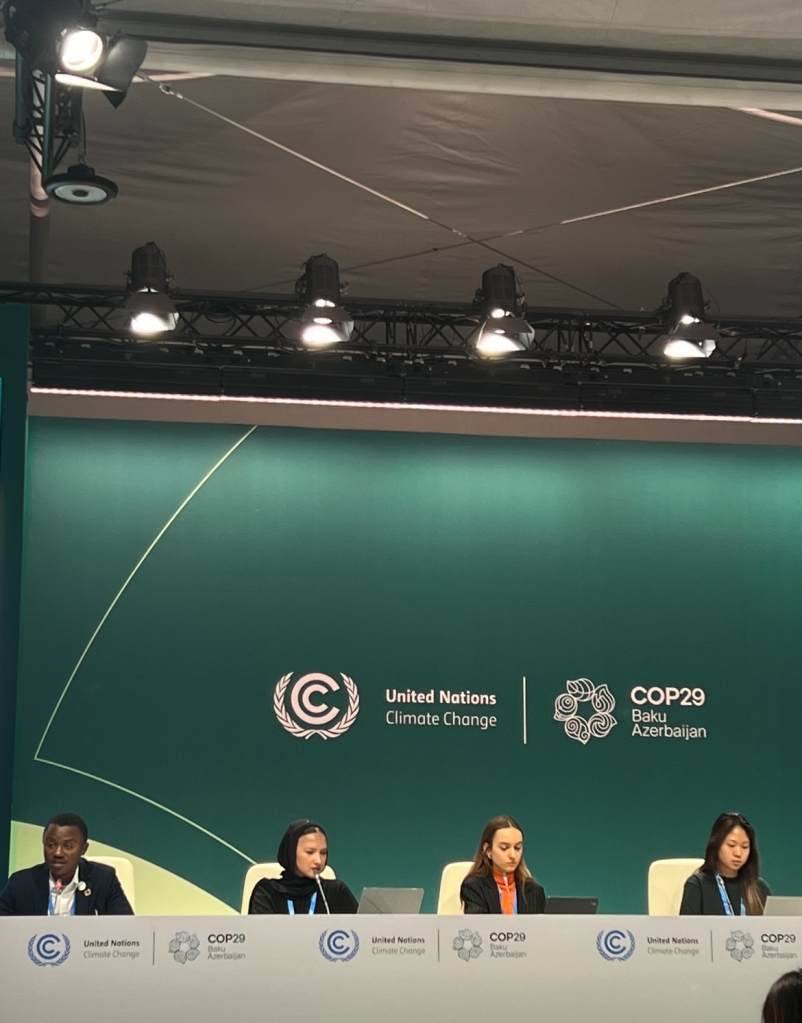
Though I was drained, I made a point to engage with the people around me—to ask where they were from, what brought them here, what they thought of the process. I was repeatedly struck by the unwavering commitment I encountered.
Being at COP29 just days after the U.S. election felt daunting and invigorating. The political landscape loomed throughout conversation, casting a shadow of uncertainty over the entire conference.
With the current administration actively rolling back climate policies, gutting environmental protections, and undermining global cooperation, it would be easy to feel disheartened. The message from Washington right now seems clear: stall progress, sow doubt, and suppress action. Yet, amidst the uncertainty, remembering the collective energy of those around me then and now has helped me cut through the discouragement.
As I reflect on the encounters I had at COP29 during this difficult political moment, I find hope in what I experienced. Being surrounded by like-minded people at COP29 was a reminder that countless driven individuals are working towards a better world. We are not alone—the international community is still moving forward towards a more sustainable future.
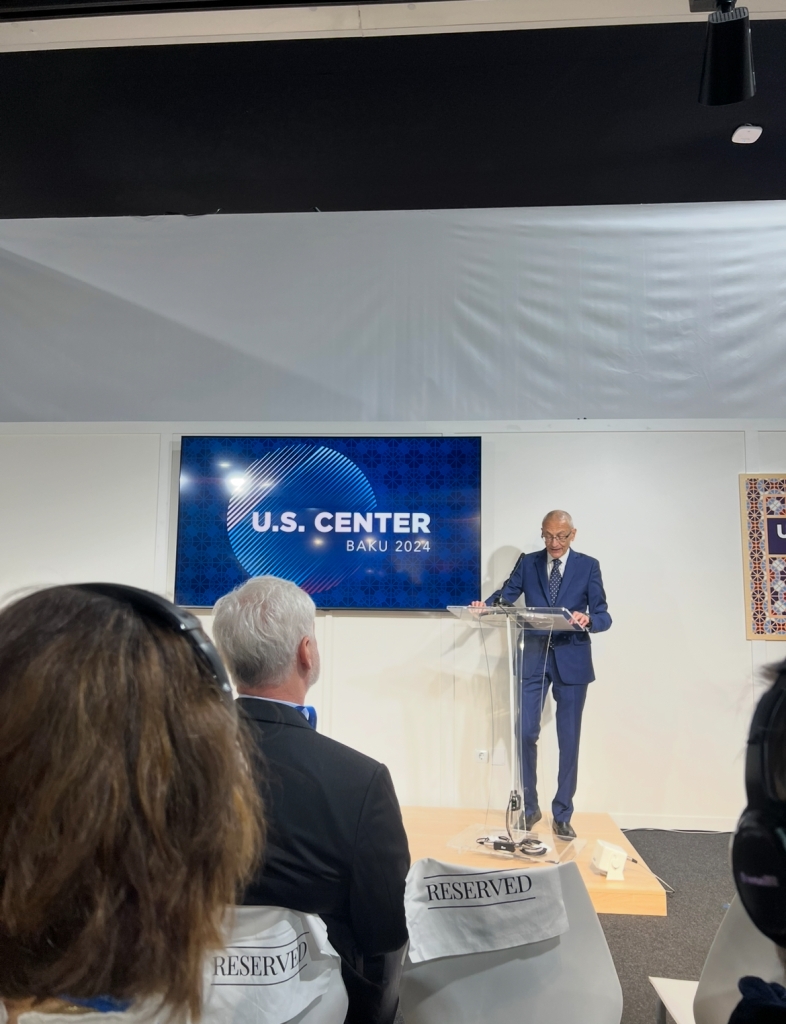
One remark by former Senior Advisor to the President for International Climate Policy, John Podesta, stayed with me: “Facts are still facts. Science is still science. The fight is bigger than one election, one political cycle, in one country. This fight is bigger still.”
While the negotiations themselves may have been frustrating, the people I met left me with something deeper — hope. The man on the bus, the young activists fighting for their communities, the career scientists who keep showing up despite the setbacks; their perseverance is what moves us forward.
And, as he said, we have to keep going.
 Climate Blue