

If you are reading this blog post, you may be keeping up with the news around COP29. Scandals and questionable political motives were on full display. In response, a quote I have been thinking about recently: “Those who don’t study history are doomed to repeat it. Yet those who do study history are doomed to stand by helplessly while everyone else repeats it.” Well this certainly feels true now. We can all draw parallels between today’s events and those of the past, highlighting the warning signs. But then my question is, who does write history and why are they repeating it? And most importantly, how do we take action collectively when our leaders are about to push us off a cliff?
First, who does write history then?
The simple answer, money.
Money decides how the world turns. Sometimes this money shows up in a corrupt government where officials frequently take bribes. Sometimes in a capitalist society like ours, money shows up in corporations, rather than in the government. Once you are endowed with money you can make all sorts of decisions, whether it’s pushing humanity forward (for example with new energy technology) or not.
Money however, is not bad. It is a tool and has to be treated as such. Corporations and governments should have no fear of spending money because by spending money we can invest in people. When we invest in people we grow wealth, because people create it. People’s ingenuity creates new things that they can use to live a better and more fulfilled life. This is true for medicine, indoor plumbing, vehicles, aviation, space exploration, and even atomic weapons. Investing in people’s ingenuity to solve the problems we are facing writes history. The right solutions in the right times write the history of our world.
Why are they repeating history?
Problems ensue when money is not treated as a tool, but rather an asset to be hoarded. Think of a tool sitting in your closet waiting to be used. Having one screwdriver on hand makes sense. Having 1 billion screwdrivers makes no sense. I am not saying that all billionaires are inherently bad. But having all that money and being afraid to use it to its full potential is hoarding. Think of a scrappy undergrad trying to make a new technology: to this person $1000 could change their purview. It could get them to the next level, it can accelerate change. But $1000 sitting in a billionaire’s bank account does nothing, it wouldn’t even be a good probability for the lottery at 0.0001% of the whole. I am not against the super rich. But if we allow such wealth, then the super rich need to be super motivated to create the change people want to see. Instead, many of the super rich are determined to grow their wealth further. Not through innovation and change making, but through the easier means of exploitation and fear mongering.
Seeking to grow wealth is an endless exploitative game. And it will never end, because people are smart. We create intellectual wealth. We do not just need to dig up fuels from the ground. There will always be enough to go around. “Necessity is the mother of invention.” People can always create more wealth and we will. However when we do, it creates more opportunities for exploitative people who seek to grow their own wealth.
According to the quote above, clearly being a historian is not a great way to drive change. So, what is? How do we take action collectively when we see our leaders are about to push us off a cliff?
On the other side of the spectrum, far from the billionaires, I see my friends and classmates. Money is needed as a tool to make change and a lot of money can make a lot of change. However, principled change makers, like my friends and classmates, often find themselves in moral dilemmas. Do I sell out my values if I take money from this one person? Should I even talk to oil and gas companies about an internship? Is taking part in the capitalist system going to corrupt my own values and lead me to wealth hoarding?
I know the quote, “power corrupts, and absolute power corrupts absolutely.” I see the parallels people make between aiming for wealth and aiming for power. I want to tell my friends that while I understand your concern about buying into the system, the only way to know is to try. We have to try to fully emerge ourselves in these systems and retain our values. This is the way to make change.
I know this is the way to make change, because the opposite doesn’t work. Isolating yourself from the system is no way to make change. A great midwestern example that always comes to my mind is the Amish. The Amish are trying to live a good life, just like everyone else. And in many cases, they achieve a good life for themselves. Sharing and community values enable a sense of purpose. However, they are strict in sticking to the idea that by taking part in the system of our modern world, they will lose the light they seek to bring to the world. By doing this, they are stuck in isolated communities. The world certainly needs light, but refusing to communicate through modern means is no way to bring that light to the modern people that need it.
The world is muddy and messy and by involving ourselves in the world we will inevitably get covered with dirt. We cannot be scared of the messiness of the world though. We have to trust that our light is going to be stronger than any dirt that will get thrown our way. Getting covered with the mess of the world is no problem, when we are confident in what we believe and our intentions in the world. We will be tested, our moral compass may shake, but we must believe we will remain strong.
Thanks for the pep talk, Rachel. But, what does that mean for my actions right now?
Dive into the systems that surround you head on with eager excitement to see how they work. You may be surprised how simple some systems are! I know when I first learned about boiling water nuclear reactors, I was shocked at how mundane they seemed. Many systems may be due for an upgrade. Once you find a system that you are interested in and know how it works, find a problem in it that needs to be solved. Once you have found a problem, find what amount of money someone would be willing to pay for the solution. If the price and the size of the problem is not worth your efforts, then try again. Find a new problem, customer, and solution. When you’ve found a good enough problem, use your intellectual wealth to create a solution and sell it! Become wealthy. Get assets at your disposal and USE them! Use these assets to create the next change. Money is needed as a tool to make change and a lot of money can make a lot of change. Maybe you could be the donor or foundation chairman contributing the needed funds for climate sustainability projects.
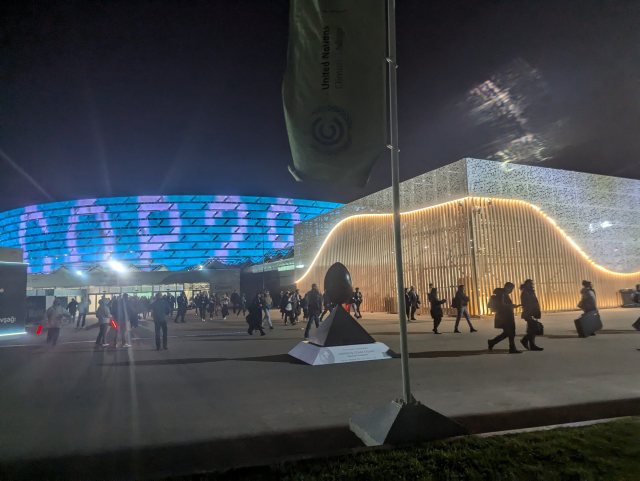
Great blog, Rachel. But I thought this was about COP? What are you talking about and how does it all relate?
COP is a system and it has many problems. Maybe you can dive into this system and see how you can make the change. You could start by taking part in YOUNGO or other organizations that represent interest groups at COP.
But also COP is ultimately a government system, where the negotiators are representatives of their governments. Many of the governments around the world do not have the capital they need to institute the change they want to and many of the other governments are tainted by people trying to hoard wealth. Few governments today actually represent the interests of the majority. Even if they do, sometimes even the majority doesn’t know what is in their best interests, because they too are so influenced by those trying to hoard wealth.
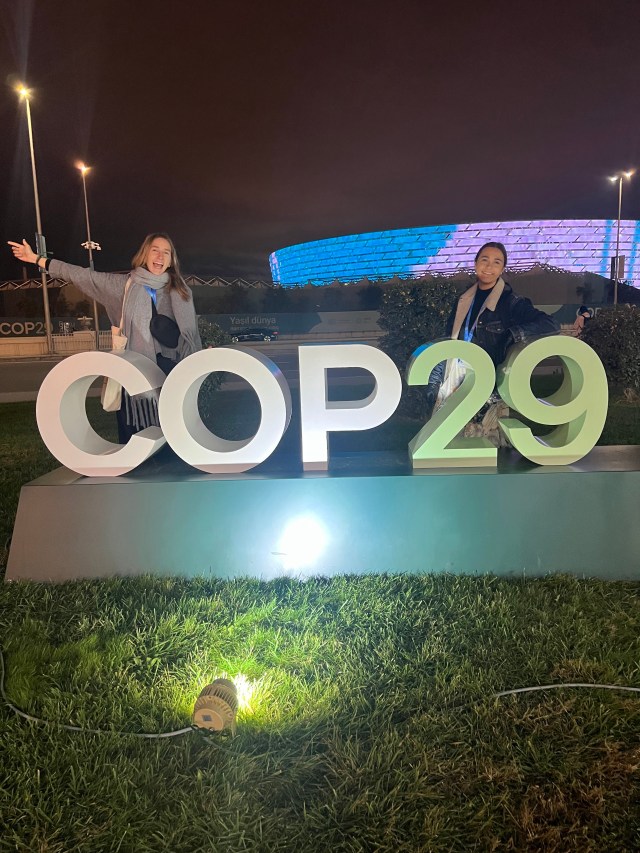
My takeaways from COP, especially considering the political climate, are mixed. It was sobering. It was motivating. It was depressing. There is so much hope to drive change for the climate and people are constantly let down. But politicians were always going to let us down. We can’t buy into any politician. With endless compromises and scandals no one can be sure of true motives here, even at the supposed environmental conference. The much better purpose for COP is to bring together a community of people working for sustainability of resources, from different stages of career, different disciplines, and different sectors. Making connections at COP and figuring out what problems exist in sustainability today are the key outcomes I took away from COP. We can be creative and work to find solutions. But until we figure it all out, keep your poker face on and keep confident in your values. Find a small problem you can solve first. Grow to solve bigger and bigger problems. This is the way to drive change.
 Climate Blue