
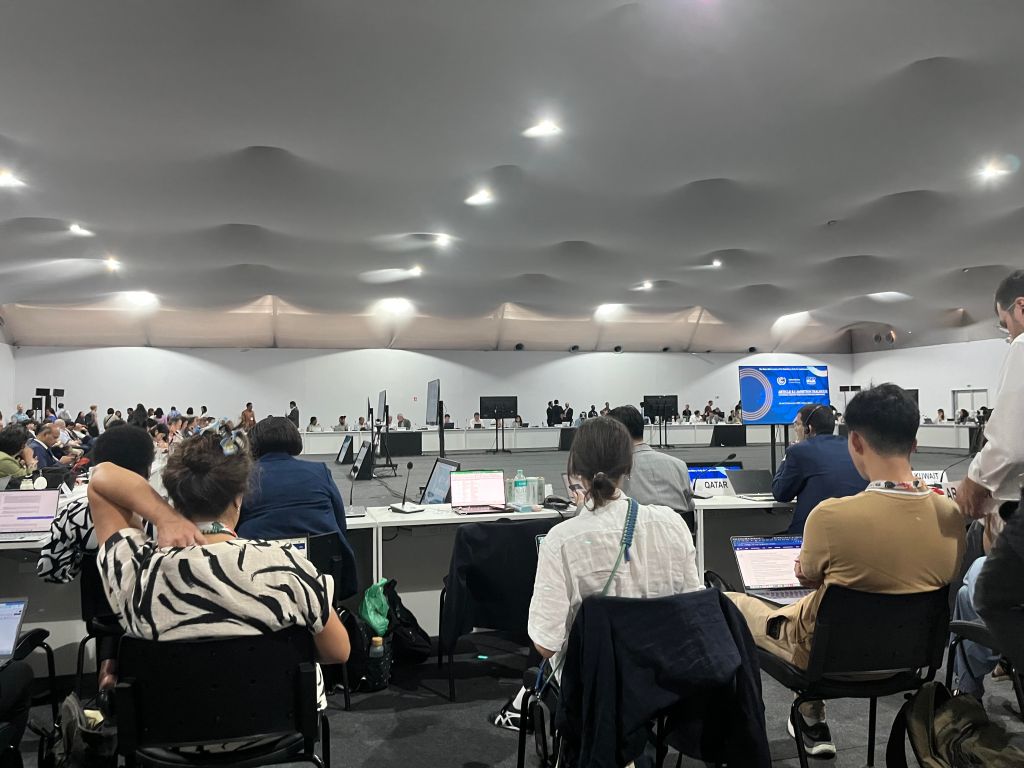
I have to admit that I was quite giddy and star struck sitting in my first informal negotiation at my first COP. Delegates sat in front of their microphones and placards with their country’s name. We all had headsets on, allowing us to understand the big, formal words spoken in six languages. I remember learning about COPs like this in school, where famous milestones in the climate movement were established like the Kyoto Protocol and Paris Agreement. Now, I got to be a part of that historic process, and I attentively listened so as not to miss a beat. However, I left that first negotiation a bit disappointed. The countries talked for three hours, but it felt like nothing was resolved and no progress was made. Granted, it was the first week of COP and negotiations take time to be finalized, but an African delegate I spoke to on the bus who had attended many COPs griped that they talk about the same things every year.
As I walked out of the big meeting room, I weaved my way through the pavilions to a side event. It was in these spaces, hosted by environmental organizations and researchers, that I felt the most encouraged and hopeful for the future. I heard about local initiatives happening all over the world and spoke with people making real change possible. For example, although the US did not send a federal delegation and was absent from negotiations, the governor of California and a former Maine politician talked about the local climate progress happening in their states, such as the Bay Area passing a zero nitrous oxide rule. Similarly, at a session addressing the current US political climate hosted by the TED Countdown House, a Los Angeles senator boasted about the SEEC Institute, which is an alliance of policymakers fighting for clean energy. They bring together Congress, academics, and businesses to secure clean energy solutions. These were refreshing stories amidst the current heavy headlines and the tangible vacuum at COP from our country’s absence.
This experience made me reflect back to the beginning of my sustainability journey, where I was focused on individual action and small behavioral changes like recycling or using a reusable water bottle. At the time, it felt like all I could do, and I enjoyed seeing a tangible outcome. As I matured and learned more about the climate crisis, I realized that large-scale institutional change was really needed to move the needle. It wouldn’t matter how many times I brought my own coffee mug if the system still profited from single-use plastic and overconsumption. In response, I shifted my focus to policy and corporate sustainability because it seemed like they had the most power. It also seemed like COP30 would be an opportunity for this large-scale type of change since powerful leaders from all over the world were gathered. Former US negotiator Sue Biniaz even mentioned that COPs are important since hearing each other’s NDCs increases ambition and pushes the needle. However, I left Belem questioning the effectiveness of the whole UNFCCC structure and the potential for meaningful change in people’s real lives. I was instead reminded of the importance and impact that grassroots movements can have. Although both are important and we need to attack the climate crisis from all angles, my faith in small-scale action was reignited.
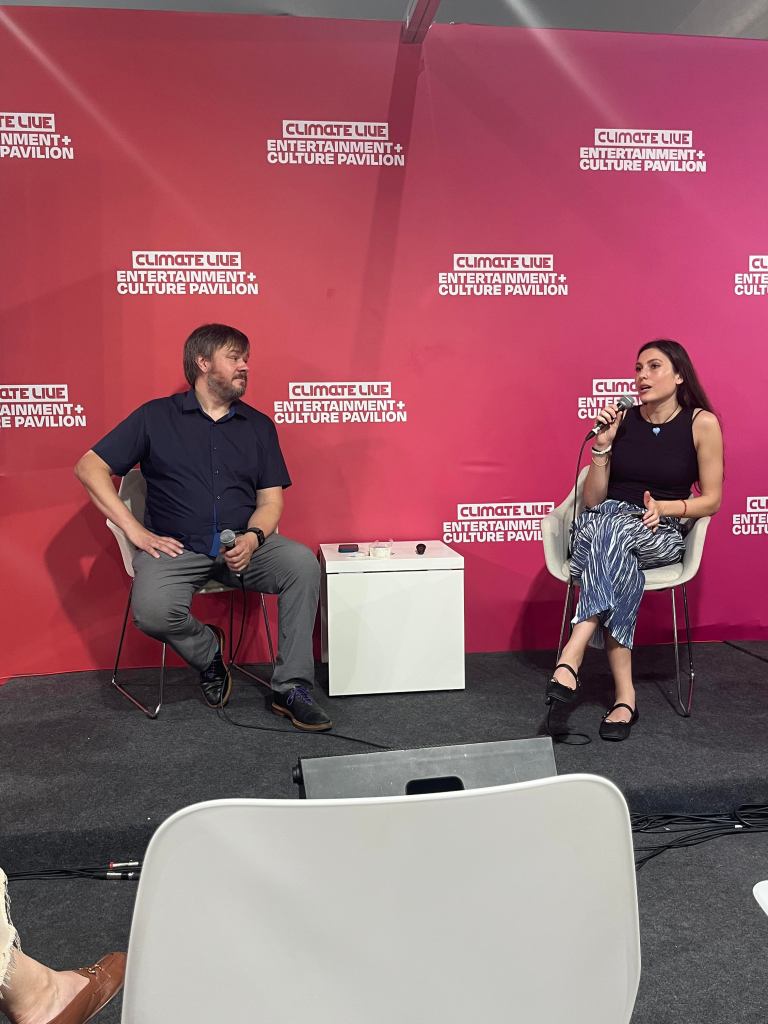
I learned about one of those small-scale initiatives at the Culture & Entertainment Pavilion in collaboration with the Climate Propagandist. This is a social media initiative started by a young European girl that combats climate misinformation, which was fitting since COP30 was known as the COP of Truth. Climate Propagandist also helps make the climate movement culturally relevant to a young audience using memes and music. Their pavilion session with Project Drawdown was about turning data into a story to communicate climate change.
I spoke with the founder of Climate Propagandist afterward to get more information about the organization, and I learned that they are not a formal NGO and don’t even have a website. I found it surprising that such a small, informal group would be an active part of COP, but I also found it encouraging. The reality is that they are doing good work and helping engage people in climate action in their own way. They may not be speaking in front of Parliament or the COP Presidency, but they are playing their part and contributing to something bigger. Maybe I need to give grassroots movements more credit and be more willing to engage with them.
Even though COP30 and the UNFCCC as a whole have been criticized for inefficiencies and empty pageantry, there were several impactful outcomes this year. This included the adoption of the Gender Action Plan and a tripling of adaptation financing, which developing countries were particularly happy about. This goes to show that the answer is found in both small initiatives that few have heard about and large structures that aim to change the system. In my personal career, I don’t think I will spend much time in the negotiating room, but I will focus on local grassroots programs because I like to work with people and see tangible change. I am thankful for this COP experience, furthering my sustainability journey and refining my interests.


 Climate Blue