
Flying into Belém, Brazil, a city dubbed “the gateway to the Amazon”, I can see the mighty river and forests beneath me. As a Ph.D. candidate, I have spent the last 3 years studying how El Niño events impact carbon uptake by terrestrial vegetation, with a particular interest in the Amazon. Amazon ecosystems store an estimated 150-200 billion tons of carbon, about half in vegetation and half in soils. As these plants photosynthesize, they uptake carbon and offset some amount of warming due to human emissions. Thus, they are sometimes referred to as the lungs of the planet, breathing in carbon and creating oxygen.
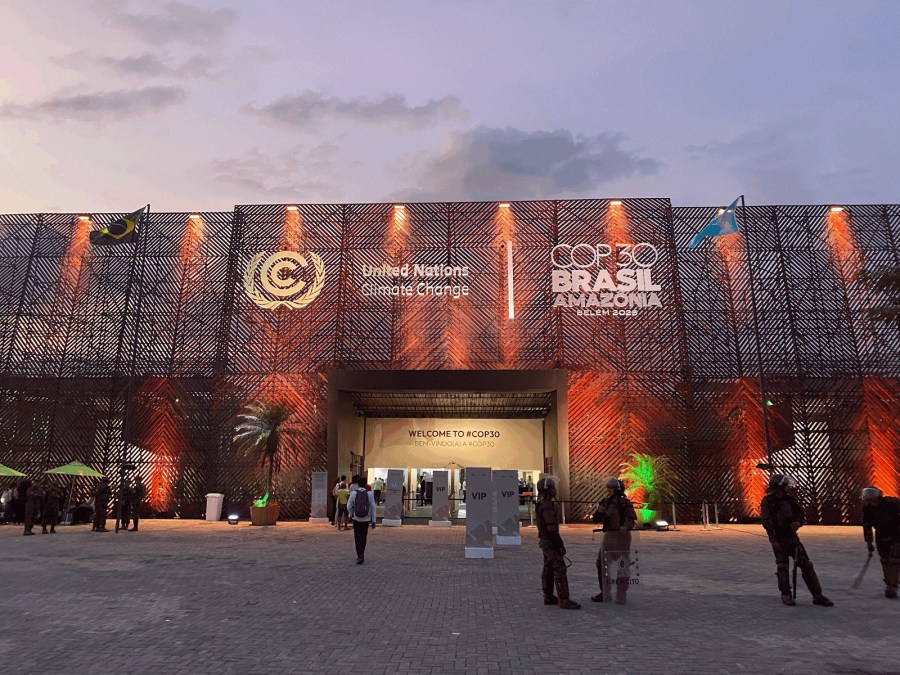
Unfortunately, like forests throughout the tropics, the Amazon is threatened by deforestation and degradation. When trees fall or burn, carbon that took centuries to accumulate is released in an instant. Scientists warn of a potential tipping point beyond which parts of the Amazon could transition to savanna-like conditions, fundamentally altering the global carbon cycle. Choosing to host COP30 at the site of one of our planet’s tipping points was especially salient. The choices that were made here can decide whether these trees, and the carbon they contain, remain standing.
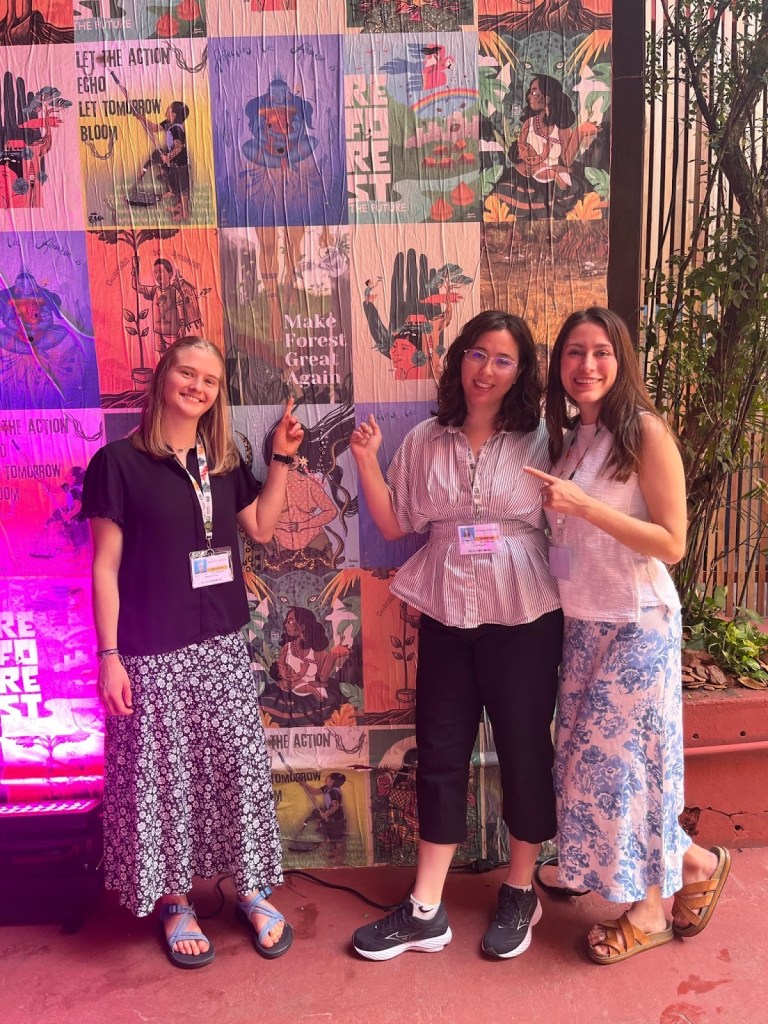
International climate negotiations have wrestled with the question of how to make forests more valuable intact than cut down. The REDD+ (Reducing Emissions from Deforestation and Forest Degradation) framework was established under the UNFCCC. This framework allowed developing tropical countries to be compensated for verified reductions in deforestation. REDD+ attempted to align climate mitigation with economic incentives, but the implementation was messy. Voluntary carbon market projects tied to forest conservation have faced high-profile scandals. Research has identified issues with inflated baseline estimates of how much deforestation would have occurred without the intervention, inflated estimates of how much carbon is being sequestered, and issues of permanence, meaning how long the carbon remains stored. Additional research has found that only 1 out of every 13 credits represents a real emissions reduction. Critics have argued that carbon credits allow polluters in wealthy nations to continue emitting while claiming offsets of questionable integrity. Finally, Indigenous communities have raised concerns about land rights and external actors profiting from forest carbon without sufficient local consent.
Cattle ranching, soy farming, and logging offer immediate, tangible returns, while standing forests offer diffuse, global benefits that are rarely priced into markets. This begs the question that if global society benefits from intact forests, shouldn’t global society help pay to keep them intact? REDD+ attempted to solve this through results-based payments, but it has proven insufficient for the scale of the problem.
Against this backdrop, the Brazil-led Tropical Forests Forever Facility (TFFF) was launched at COP30. The TFFF is a $125 billion blended finance initiative to compensate nations, not just for reducing deforestation relative to a baseline, but for maintaining standing forests via satellite-verified long-term payments. The TFFF represented a shift from fragmented project-level credits toward nation-scale finance that prioritizes integrity and permanence. If successful, it could reduce some of the credibility problems that have plagued REDD+ and the voluntary carbon markets and create more predictable funding for forest stewardship. Additionally, of payments made to nations from the TFFF, 20% would be paid to Indigenous peoples and local communities, reaffirming efforts to correct mistakes made in the past and Brazil’s commitment to greater consideration for indigenous communities under their COP presidency.
The Brazilian Presidency agenda was based on two pillars, implementation and forests. After 30 years of COPs, we have crossed the huge hurdles of getting all Parties in the room together and coming to an agreement. The era of drafting agreements is giving way to the harder work of implementation. As autocracies gain power across the world and resistance to climate action mounts, the Brazilian Presidency was in the position of defending multilateralism itself and fighting against disinformation.
During my week at COP, the latest Global Carbon Budget was published, confirming that we will likely surpass 1.5° C degrees warming within four years. That threshold, which was so fiercely negotiated over 10 years ago in Paris, will soon be crossed. And yet, every tenth of a degree is worth fighting for. Every hectare of forest that stays standing matters. COP30 did not resolve all of the many, many challenges involved in keeping forests intact, but it did move the needle forward and bring forests back to the center of global climate politics.
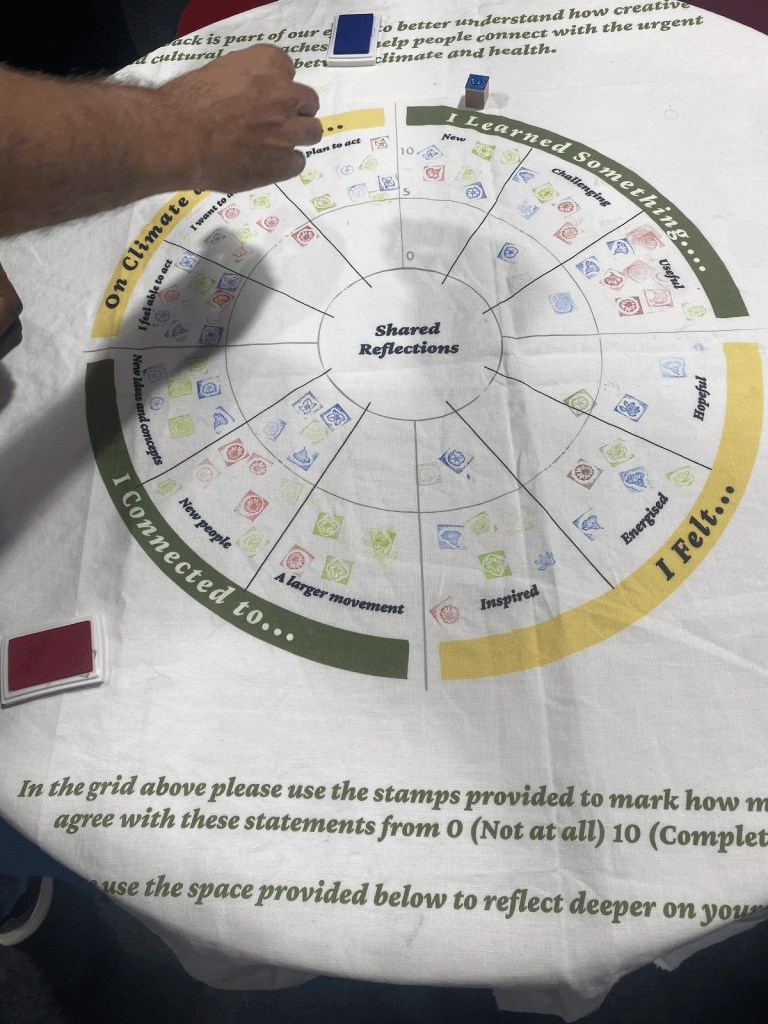
Flying home from Belém, I thought again about the forests and river below me. In my models, forests are abstractly represented as grid cells and fluxes. At COP30, they represented political, economic, and moral questions. Rooted in Brazilian culture, there were calls for a global mutiraõ, or collective effort, to combat climate change. It’s time to put up a fight for real solutions, for truth, for science, for taking the necessary actions together. I am more inspired than ever, and I know I’m not alone in that.
 Climate Blue